Sara Wilson
 by Stephen Shaw
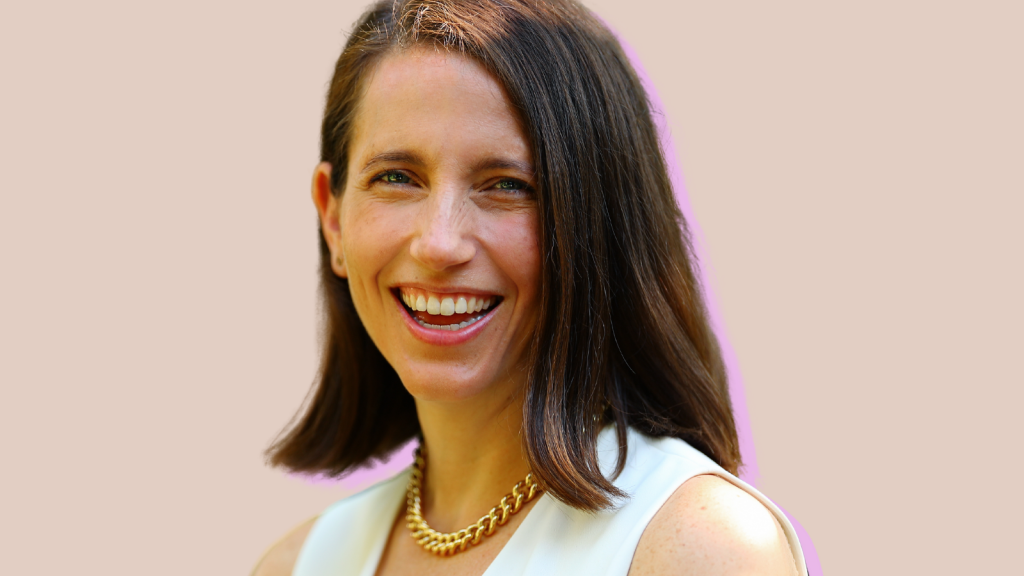
Sara Wilson is a recognized authority on GenZ, digital trends, and building online communities.
The big social media platforms that have dominated everyday life for a generation are now becoming a giant melting glacier.
Slowly, silently, almost imperceptibly people are drifting away from those platforms to seek refuge in more private social spaces where they can have closed door conversations out of earshot from everyone except those they trust the most.
The era of “performative sharing” – of calling attention to even the most banal moments in your life – of waiting anxiously to see how many “likes” you got – may finally, mercifully, be coming to an end.
People are suffering from social fatigue. From the barrage of meddlesome posts inserted into their feeds from brands and influencers. From toxic content that stirs up negativity and indignation. From the feeling that Big Brother is looking over their shoulder.
Yet most people still want to connect online with friends, with friends of friends, with their social circle. They are driven by the tribal instinct to “belong”. Instead of showing off in front of people, they are choosing to gather in closed niche communities where they can be more themselves. A place where they can chat openly with like-minded people who share their values, their interests, their lifestyle, their passion points, and yes, their world view, without fear of being judged or mocked.
GenZ is leading the way. Their preferred method of communicating with their closest friends is by far DM messaging apps like Facebook Messenger, WhatsApp, and Telegram. And an estimated one fifth of GenZers now use the micro-community platform Discord which has over 200 million active users worldwide and 7 million servers that host a diverse range of communities. Users connect through text, voice, and video and spend on average four hours a week on the platform just hanging out.
This shift in social media habits has begun to wall off brands from a coveted demographic cohort. Whereas Facebook has always been a low-cost way to reach a target audience (and remains so), brands are beginning to realize that they have to find another way to connect with people or eventually be shut out of their digital lives. The answer, for many brands, has been to build communities of their own from scratch. According to one study, 80% of businesses report having a community program of some kind, if for no other reason than to provide customer support. But the brands that have been most successful at community building – that have built vibrant, engaged, devoted communities – have done so as part of a broader relationship building strategy.
Look at Salesforce with its massive Trailblazer Community – Sephora with its Beauty Insider program – LEGO Ideas which counts on the enthusiasm of their fans to come up with new product ideas – or at any of the activity-related communities like Peloton Facebook Groups, Nike’s Run Club, and Lululemon’s Member program, to name just a few.
Of course those brands have the marketing savvy and budget to invest in building a passionate fanbase. They are careful to earn the trust of community members. They allow engagement between members to grow organically. They give the program room to breathe, having won the support of upper management. Which is why many communities start small and stay that way – just too many hurdles to overcome with too few resources.
An easier approach, suggests community evangelist Sara Wilson, is to show up in the communities where your target audience is already gathering, whether that’s group chats, forums, subreddits, or private Discord servers. Sara has memorably and famously dubbed them “digital campfires”, meaning intimate settings where people go to hang out. But in order for brands to join those conversations, they first need to be seen as partners, not interlopers, as creative contributors, not promoters, as event collaborators, not just sponsors. Tough to do for most brands, trained to hunt, not to mingle.
Sara is a former journalist specializing in lifestyle and culture with a keen observant eye who tracks the evolving world of community building through her incisive Substack newsletter “Community Catalyst”. Her consultancy, SW Projects, specializes in helping brands adapt to a world where, as she puts it, “real purchasing decisions happen in the online rooms they’re not in”.
After a decade or so as a journalist, Sara joined Facebook in 2018 where she led strategic partnerships in the lifestyle category. I started by asking Sara what prompted her to veer off a successful career in journalism to join Facebook.
SARA WILSON: It’s funny, I don’t see it as different. I started my career in magazines and newspapers. But when everything began to shift to digital media, that’s when I went to Huffington Post. And then around 2013 there was the shift to social. So that’s how I ended up at Facebook. It was a really interesting time when I joined the company. It wasn’t quite a big company yet. So it was at this really wonderful inflection point. Facebook had just bought Instagram about a year earlier and it was still largely untapped in terms of what we were going to do with it. And so I got to really have that app as a playground to figure out how to build a culture-first brand and drive growth by tapping into culture.
STEPHEN SHAW: Was the world of digital marketing new to you?
WILSON: Not if you think of brand as a media company, in which case I had lots of experience understanding how to connect with audiences.
SHAW: Did you find Facebook or did they find you?
WILSON: I found them. It was actually through a friend of a friend who was running partnerships there. I went onto campus in Menlo Park and I was just really intrigued. And obviously Facebook is a fascinating place to work if you are interested in aligning with culture, getting inside tech. It was just a really compelling opportunity. And so it really was a combination of just being right place, right time.
SHAW: What was your role at Facebook?
WILSON: So for about two years, the opportunity was driving growth and cultural awareness for Instagram – specifically making Instagram the number one social platform for the fashion community. I ran lifestyle partnerships, so I was in charge of all creator relationships across food, fashion, home, health, travel, all of those lifestyle categories. It was a bet in saying we can really dial into this community and help them feel seen, help them feel known, and really speak directly to them. That idea of really dialing into a core community and making them feel seen and known and loved is really how the best marketing happens today.
SHAW: To a large extent you were on the ground floor of Facebook during its formative years.
WILSON: Actually I was kind of like medium floor. From when I joined to when I left, the company had grown by, I think it was 98%. So you have to understand the growth was happening really quickly.
SHAW: What made you decide to leave?
WILSON: I’d been there for five years. I am not a big company girly. As long as I was delivering results, I could do as I wanted. That changed as the company grew. And so I started looking elsewhere, because like I was saying earlier about having a media background, I knew that I could be very helpful in helping brands to navigate that. Brands were leading movements, leading social conversations, not just in that ham-fisted way of sponsorships, but in people looking to brands as a North Star, as arbiters of truth.
SHAW: You’ve said that the era of social media is ending. How do you see it evolving?
WILSON: I think you’re referring to an article I wrote in the Harvard Business Review called “The Era of Anti-Social Social Media”. In that piece, I gave a name to a trend that I had observed of younger audiences moving away from open social platforms toward smaller, more intimate platforms such as Discord, Roblox, even WhatsApp. And the name that I gave to those types of platforms was “digital campfires”. And since then the concept has metastasized from just a platform trend to a way the Internet exists. Everything is a digital campfire now. The way we experience culture, the way we experience every aspect of society, is now niche.
SHAW: Describe for me exactly what a digital campfire is.
WILSON: So there’s three types based on the reasons people are gathering there. The first is private messaging campfires. That’s pretty self-explanatory. So that might be Instagram DM, WhatsApp, et cetera. Then there are micro community campfires. So that is communities based on shared interests, shared hobbies, where you have specific people coming together to swap ideas. Then you have shared experience campfires where they’re actually having an experience together. So that’s oftentimes a gaming experience. So a Roblox, a Fortnite, etc. The best example of micro communities right now is Reddit. Subreddits are a great example of hyper-specific micro communities that come together around the most niche of topics.
SHAW: You gave the example in your recent newsletter of a micro community called Swang.
WILSON: So Swang is a great example. It’s a golf community that is devoted to getting underrepresented voices into golf. It’s really fun, it’s really vibey. So the way that the founder of Swang is envisioning this community is much more than just a meetup, or just a group. This is about creating multi-platform content. This is about membership experiences. So it’s a big vision that is akin to a media company. I believe the next wave of media companies are going to start as communities.
SHAW: Now where I get a little confused is the distinction between a digital campfire and a community. And so I think about Glossier, which has its own set of micro communities. I think of Nike with its running clubs. Do you see them as being different somehow?
WILSON: Typically I’ve applied the term digital campfires to platforms. A way of communicating online. But the term community is what most people know. And so what I talk about now is “community-powered brands”. I talk about brands tapping into existing communities. Like a run club, or a Swang community. As long as they align with the audiences that they want to reach, they can drive tremendous attention and loyalty for their brand.
So what is the difference? A community is a group of people who are united by what I call “identity seeds”: values, beliefs, ideas, sometimes fears, things that bring them together around certain aspects of their identity. And it could be online or off. They do start as conversations, and then sometimes they’ll bubble up into communities, movements, etc. So I think that a community can take shape as a digital campfire. So you could have a community that has a Discord, for example, or a community that has a WhatsApp.
SHAW: Are customer support forums disqualified because they’re serving a corporate function?
WILSON: You bring up a really interesting point. I think that companies have said, okay, cool, we need to launch a Slack channel. And oftentimes it does not work. It does not drive engagement, and it takes up a lot of resources. And so my approach is much more about tapping into existing communities. It’s not starting a Discord necessarily. Nine times out of ten it’ll be about going into an existing community where your audience is and figuring out how to show up there in a way that is going to help your audience feel seen. So that is the difference.
Salesforce has launched a very successful – notoriously very successful – SaaS-like community for years. But I’m referring to organic communities that have not been started by brands and have bubbled up from the culture. That said, I’m now seeing some incredible brand communities that are being started by brands. So for example, the brand “Sleep or Die” which is actually based in Vancouver. The whole ethos of the brand is about anti-hustle culture for Gen Z women. Get your sleep – anti-hustle. And the founder has done an incredible job building her own community for the brand. Another example is NOYZ, a next gen perfume brand, and they’ve also done an incredible job of building community. But a lot of brands just don’t know where to start.
SHAW: Just to be clear: you’re not suggesting that brands should avoid starting one of their own.
WILSON: Absolutely, not as long as it makes sense. But what I’m saying is it doesn’t always make sense for a lot of brands. Community is multi-platform, it’s multidisciplinary. It’s not just one thing.
SHAW: What are the major obstacles that stand in the way of a community growing?
WILSON: Most brand communities are customer channels for people to get customer service. They are not communities. They’re not places where people go to connect with other like minded people who share similar identity seeds. And that is the fundamental misunderstanding that I think most brands have when they are talking about community. There has to be something bigger. And that’s why when we’re thinking about community, we always have to go back to what is the bigger belief system that your brand taps into. It’s not just a product anymore. We have to think about what is the bigger idea, the transformation that your brand can spark. So when I’m working with brands, before we do anything, we go back to what I call building a “community magnetic blueprint”. And the blueprint process actually gets us to a place where we’re defining what is the brand belief, what is the transformation that you spark, what are the core emotional values that you offer and who are you for. So once we get that in a blueprint it is really the thing that is going to make you magnetic to organic communities or enable you to build your own. That’s essential.
SHAW: It has to ladder up to brand purpose.
WILSON: It does, yeah. It’s connected. I think the brand purpose discussion has gotten very confusing. I happen to know what makes people go to communities and it is a sense of identity and connection to something bigger than themselves. So your brand has to deliver that. People go into community for a transformation. By going into this community, I am going to become a better parent – Dr. Becky for example. By going into this community, I am going to become a menopausal woman who is loving life instead of one who’s hating it – Mary Claire Haver. You have to a brand that sparks a transformation. So you really need to be thinking, what is the transformation our brand sparks?
So people are private messaging on social more than any other behaviour. Therefore as a marketer, you need to be thinking, how do you get inside those DMs? How do you get inside the group chat? The only way, unless there’s some magic way that I don’t know, is to get people to take you there. And so how do you get people to take you there? You need to tap into some aspect of their identity. I call it the “OMG that’s so me effect”. And it’s the thing that’s going to get your brand into the group chat, into the DM.
SHAW: I love your expression in one of your blogs that people don’t trust the platforms they’re on, but they trust the people who are on the platforms.
WILSON: So interesting, right?
SHAW: Another term you’ve coined is “narrative engineering”. What do you mean by that?
WILSON: I have been tracking the rise of disinformation on the Internet for quite some time. Largely, it’s been relegated to the realm of politics. It’s been relegated to public affairs. And so I was really curious when I started to see a couple of months ago the Cracker Barrel controversy. Something just felt very off to me with how that conversation just popped so intensely, so quickly. There was a very heavy concentration of bots, of fake profiles driving the conversation. So driving negative sentiment, ramping up the online discourse in the same way that we’ve seen around elections and politics. This is new. But it is getting a lot more common, at least in the last 12 to 18 months.
SHAW: Who’s behind the outrage machine?
WILSON: So I don’t have an answer for that. But we do know that this is happening. The way that you can head it off proactively is by developing something I call a “community immune system” – investing in building your community, investing in knowing your people, investing in showing up in the spaces where they are with real interactions and building real relationships so that if and when these kinds of controversies hit you, you will know the difference between real sentiment and fake sentiment. I think what’s so hard for brands to understand is what’s real, what’s fake. They don’t know how to parse that. But if you know your people and you’ve spent time with them in those spaces, then when those things happen, you don’t have to be as concerned.
SHAW: Your fans will come to your defence too.
WILSON: Exactly, so I actually saw this long before the bot conversation came to play. We saw it with things like Chipotle. Do you remember years ago when Chipotle had this crazy lawsuit over a contamination issue. That was really bad. And in the subsequent years, Chipotle doubled down on building out its community with social first conversation. They did a lot of really clever things. They just really invested in their community and they created this patina, this halo effect that drowned out the negative noise. And they know generally what their community is saying, feeling and doing. So that’s when I talk about the community immune system. So that when fake attacks hits, you can be much more immune to it.
SHAW: How should companies organize around community?
WILSON: You can be best served with a social manager – a community manager – someone who’s actually looking at what are those community insights bubbling up. But I also encourage teams to divide and conquer. If you’re doing social listening on Reddit, have each key marketing team member take a couple of hours a week, 20 minutes a week, to listen and learn what your community is saying. You want to be learning on a regular basis across your team to digest those insights. And then get together once a week to say, what’s the most interesting community insight you learned so that you can compile them and share.
SHAW: You also believe that the gathering of market intelligence is fundamentally broken. And you wrote a whole blog around Reddit’s recent initiatives to package community insight for brands. Can you elaborate on what you’re seeing there?
WILSON: What I noticed is that social listening focuses on mentions, so it’s kind of like media monitoring. How are people talking about your brand? The problem is that most people don’t talk on social. Most people are just there to watch, to consume. They’re not talking. So you’re missing what they believe. So I have two key ways to address that. The first is an analysis I have called Audience Atlas, which is looking at a segment, a slice of your social following. Let’s take Instagram, for example. We’ll take a slice of your followers and look at what they follow to determine what are some insights we can tease out from that based on what are the accounts that they’re over indexing on. And so I’ve run those Audience Atlas reports for several brand clients and the output is just really fascinating. And those might be people who’ve never said a word on their Instagram, right? So that’s number one.
Number two is identity intel. The most interesting intelligence is often coming up on platforms that are not showing up on traditional social listening. So it might be a Discord channel, it might be a WhatsApp. You have to join those places to listen and find out what people are saying. You cannot get at them because they’re closed. Traditional social listening does not pull in private Facebook groups, but you can manually join them and listen. And so I call that digital campfire reporting, where you’re actually going inside the spaces and places where your audience hangs out to understand what are they worried about, what are their pain points, what are they excited about, what makes them tick, what’s the language that they speak. All of that stuff is not typically being captured in traditional social listening.
SHAW: Talk to me about your startup playbook. Does it begin with finding shared passions, building a community around them, cultivating relationships, et cetera?
WILSON: I have an eight week sprint that I run brands through called the Community Catalyst. There’s three parts. It’s called “Fuel Up, Calibrate, and Engage”. For the first, we build their brand blueprint, their community relevance blueprint I mentioned. That’s phase one. We make sure we get really clear on who they are, what they stand for and who they’re for.
Then we go into an audience exercise where I really go deep on who they need to get in front of. Okay, we know generally who they’re for, but what are those micro audiences we need to get in front of? And for that we look at a variety of clues, including who is in their current following and how can I analyze that to discern who might be most receptive to their messages? We really go deep on audience and we also define the communities, where those audiences are hanging out.
Then in the third phase, we bring it to life. And I build them what’s called a “Community-powered Flywheel” where I take each community that we’ve decided on, where their audience is, and I build out a social plan, a partnership plan, an IRL [in real life] events plan, and a creator plan. You’re taking all four parts, all of those four elements, and building a whole ecosystem for the brand around that key community. How you embed them in that community. That system, that eight week sprint, is a roadmap for driving attention, relevance and loyalty among traditionally Gen Z audiences primarily.
SHAW: Give me your vision for where brand marketing is going.
WILSON: Community is really just a conduit for creating a relationship. It is the fastest, most powerful tool as a marketer, to build an intimate relationship with the exact audience you want to reach. And I call communities “PIPES” – personal identity ports of entry. And that is because they connect directly into people’s core identity. And so when you do that right, you can build a very deep and lasting relationship with them. But relationship building is the point. And what the community does is just facilitate that. So that’s what I see in the future.
SHAW: So if you ask a marketer where they’re under most pressure, it’s to deliver results tomorrow, not a year from now, not two years from now. Community building is a slow burn. It takes time for a community to mature. How do you convince a skeptical CEO that this is a good investment?
WILSON: I keep referencing NOYZ because it’s on my mind, but that brand launched in February 2024. It’s like a little over a year ago. And now they’re in New York Fashion Week with lines around the block, doing really cool activations, massive social following, incredible engagement, sales through the roof. So it’s not like this stuff takes years and years. It can happen quickly if you make an investment in it. So what do you have to lose by not doing this? What are you going to lose by delaying?
SHAW: Have you noticed a groundswell of interest?
WILSON: Absolutely. Everybody is looking for solutions because they see how broken the marketing landscape is with the chaos of current attribution models, the chaos of paid media, and all the changes that have happened to iOS, with just fracturing attention spans. All of the things that make this a very difficult marketing environment are leading people to seek new solutions. So I think the smart marketers are already aware that they have to pursue another path. And that’s exciting.
SHAW: In short, the future of business and marketing really is community building.
WILSON: I believe it is. I believe it’s building community-powered brands. And that’s why I’m betting my entire professional future on it.
Stephen Shaw is the Chief Strategy Officer of Kenna, a marketing solutions provider specializing in delivering a more unified customer experience. He is also the host of the Customer First Thinking podcast. Stephen can be reached via e-mail at sshaw@kenna.
Related Posts