 by Richard Schenker
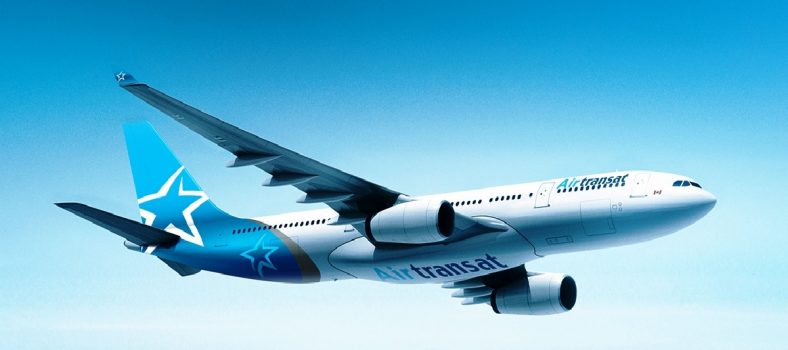
The announcement that Desjardins Group and Air Transat, alongside Visa, will introduce a new loyalty initiative in the second half of 2026 represents an important evolution for both organizations. It signals Air Transat’s long-awaited entry into structured loyalty and gives Desjardins a differentiated position in the travel rewards space.
Early communication have emphasized the co-branded credit card and it appears the program will include experiential elements across the customer travel journey. What remains unclear is the depth and ambition of those experiences. That uncertainty matters, because the ultimate success of this partnership will depend less on card mechanics and more on whether it can create emotional loyalty in a way traditional airline programs have struggled to do. Moreover, there was no mention of the program beyond the credit card portfolio. If that is the case, there will be barriers to participation and the program audience size will be limited in access and business impact.
A Strategically Logical Partnership with Clear Commercial Rationale
From a business perspective, the partnership makes sense. Air Transat has long operated without a proprietary loyalty program, an unusual position in an industry where loyalty economics often rival flight economics in importance. For a leisure airline, loyalty is not about weekly business travel but about repeat vacations, ancillary spend, and staying relevant during long gaps between trips.
A credit-card-based model provides predictable revenue, supports customer lifetime value, and keeps the brand present even when customers are not actively traveling. For Desjardins, the partnership strengthens its presence in the travel category and aligns the brand with an emotionally resonant purchase category. Visa’s role ensures international usability and removes friction for cardholders traveling abroad.
The strategic foundation is solid. The question is how expansively the loyalty opportunity will be interpreted.
Experiential Loyalty as the Real Differentiator
Unlike traditional airline loyalty programs that prioritize miles, status tiers, and upgrade mechanics, Air Transat operates in a fundamentally different emotional space. Its customers are traveling for leisure, connection, escape, and life experiences. That distinction creates an opportunity to build loyalty not around frequency, but around meaning.
The indication that experiential elements will be included is encouraging. However, the lack of clarity around what those experiences entail leaves open a critical question: will experience be central to the program, or simply a supporting feature?
True experiential loyalty would span the entire travel journey. It would show up in how customers are inspired to travel, how they are treated during booking, how friction is reduced at the airport, how their destination experience is enhanced, and how the brand reconnects with them after the trip ends. These are the moments that shape memory and emotion, and they are largely untouched by traditional airline loyalty structures.
This is also where Air Transat has a unique opportunity to differentiate from their airline competitors who are business and leisure airlines. Their programs tend to be optimized for frequent flyers and elite status progression. They perform well for business travelers but are less effective at building emotional connection with leisure travelers who fly once or twice a year. Air Transat has the chance to design loyalty around moments that matter rather than miles flown or even dollars spent.
A Distinct Advantage in the Vacation Ecosystem
One of the most compelling aspects of this partnership is Air Transat’s position within the broader vacation ecosystem. Unlike network carriers, Air Transat sits at the intersection of flights, vacation packages, hotels, and destination experiences.
This creates the potential for a loyalty model that extends beyond air travel into the full vacation lifecycle. Rewards and recognition could be tied to hotel stays, excursions, destination services, or even pre-trip planning and inspiration. Partnerships across the travel ecosystem could allow loyalty to feel tangible, immediate, and emotionally resonant rather than abstract.
If activated thoughtfully, this approach would allow Air Transat to build a form of emotional loyalty that traditional airline programs struggle to replicate, one rooted in experience, memory, and personal relevance rather than transactional accumulation.
The Desjardins Factor: Strength and Constraint
The Desjardins partnership brings both advantage and limitation. Desjardins has deep trust, strong brand equity, and a loyal customer base, particularly in Quebec. That regional strength aligns well with Air Transat’s core market and provides a solid foundation for initial adoption.
At the same time, Desjardins’ geographic concentration introduces a structural constraint. As a credit card issuer with a predominantly Quebec-based footprint, its reach is more limited than that of national or international banks. This may cap the program’s growth potential outside Quebec unless additional mechanisms are introduced to broaden participation.
This is where the structure of the loyalty program becomes critical. If access is tightly bound to card ownership, growth will naturally be constrained by the issuer’s footprint. If, however, the card becomes one tier within a broader loyalty ecosystem that allows non-cardholders to participate, engage, and aspire upward, the program’s reach could extend well beyond the limits of the financial product itself. In this sense, the Desjardins relationship should be viewed as a foundation, not a ceiling.
A Moment of Strategic Choice
Ultimately, the Desjardins–Air Transat partnership represents a strong financial and strategic move. But its long-term impact will depend on how boldly it evolves beyond traditional loyalty thinking.
If the program remains primarily a credit card with added benefits, it will likely perform well but remain constrained in scale and differentiation. If it becomes a platform for experiential, emotionally driven loyalty across the full travel journey, it has the potential to stand apart in a crowded and mature market.
The opportunity is clear. The intent has been signaled. What comes next will determine whether this partnership becomes a conventional co-branded card or a genuinely modern loyalty ecosystem built for how people travel today.
Richard Schenker has consulted to Air Canada and WestJet during his professional career. He is a highly accomplished customer engagement thought leader, loyalty practitioner and partnership curator who has designed, renovated, and managed some of the world’s leading customer loyalty programs. He has an impeccable track record of success at enriching transactional and emotional relationships between iconic brands and their customers, across multiple business sectors. Richard has spent the first half of his career in senior loyalty roles with the Hudson’s Bay Company and Shoppers Drug Mart and the remainder of his career in leadership roles with leading loyalty agencies, Air Miles and Bond Brand Loyalty. Currently he is the Founder & Chief Customer Engagement Officer of Loyal Strategy Consulting, a consulting firm focused on enriching customer loyalty for leading brands. Richard can be reached at: rschenker@loyalstrategyconsulting.com or visit: https://loyalstrategyconsulting.com
Related Posts